LGBTQ+ couples planning a wedding need a venue that guarantees equal treatment in writing, not a rainbow flag in the marketing photos and silence everywhere else. The stakes are different from a straight couple's search: officiant willingness, restroom signage, and how a coordinator handles two brides or two grooms on the contract all matter before the flowers do.
- Wedding venues for LGBTQ+ couples in 2026 need a written non-discrimination policy, not a verbal promise.
- Great Marsh Estate hosts weddings for up to 200 guests in Bealeton, Virginia, with ceremony space that works for any couple.
- Ask about officiant sourcing and all-gender restroom access before you sign, not after the deposit clears.
- Vendor teams (caterer, photographer, DJ) need the same vetting as the venue itself.
Why wedding venue choice matters more for LGBTQ+ couples
A venue's brochure language rarely tells you how a coordinator will actually behave on the wedding day. Two grooms booking a manor house have run into staff who default to "bride" on every form, officiants who quietly cancel, and seating charts built around assumptions the couple never made.
Virginia legalized same-sex marriage in 2014, and federal recognition followed nationwide in 2015 under Obergefell v. Hodges, so the legal right to marry isn't the question anymore in 2026. The question is whether the venue, the officiant, and the vendor team treat that marriage as equal to any other one. That's a service and culture question, not a legal one, and it has to be answered before a deposit changes hands.
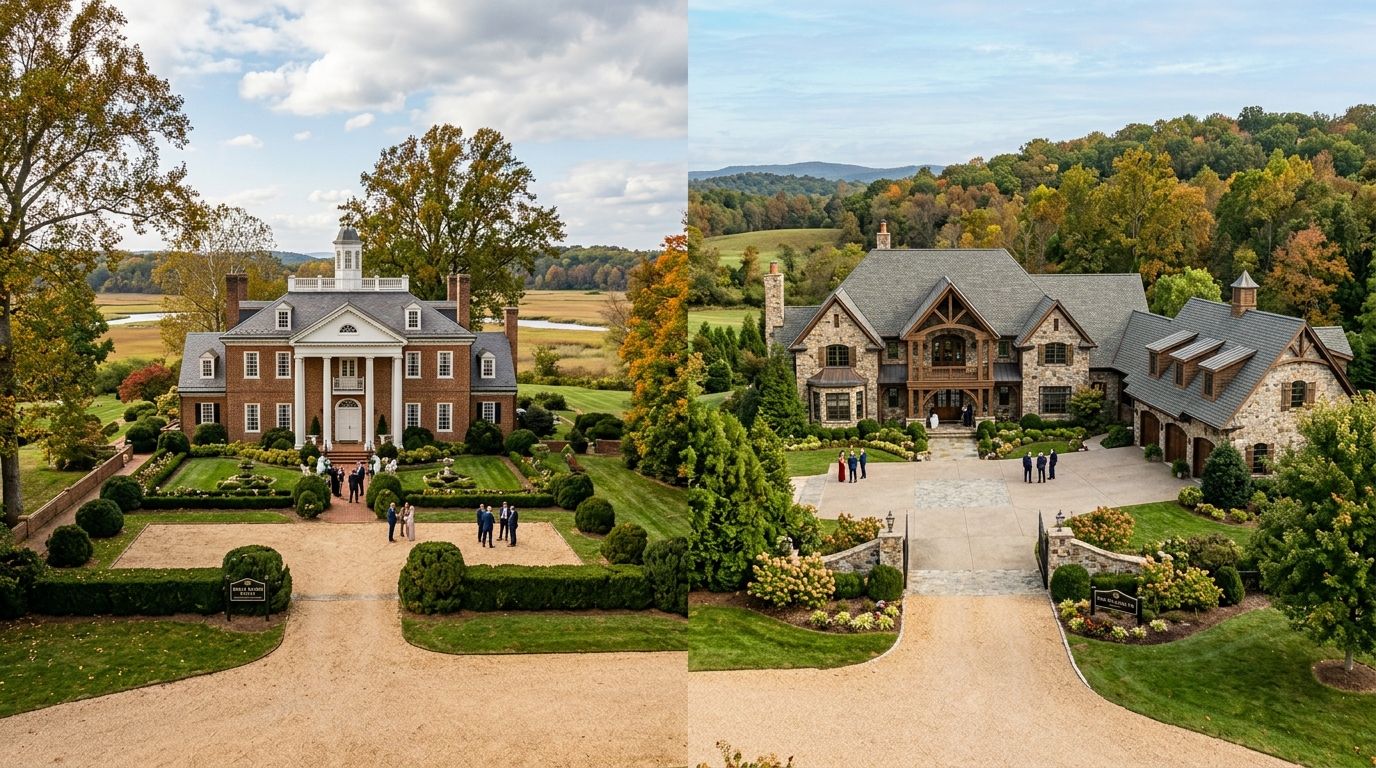
A restored Georgian manor near Washington, D.C. with a bridal suite and a groom's lounge on the same floor plan signals something different than a venue that only photographs one gendered getting-ready space. Details like that show up in a walkthrough, not in a website's About page.
Update your venue shortlist first
Start by narrowing the field to venues that state their policy in writing, not just in a sales call.
- Search the venue's actual contract or FAQ page for the words "non-discrimination" or "all couples"
- Check whether the venue photographs same-sex weddings in its own portfolio, not just stock imagery
- Ask directly whether staff have hosted a same-sex ceremony on-site before, and how recently
- Confirm the venue works with officiants regardless of the couple's gender composition
- Cross-reference the venue against wedding venues in Northern Virginia to compare inclusivity signals across a wider set
Confirm the officiant will actually show up
An officiant backing out days before the ceremony is one of the most common failures LGBTQ+ couples report, and it rarely gets flagged in early conversations.
- Get the officiant's commitment in writing, separate from the venue contract
- Ask if the venue maintains a list of officiants known to perform any legally recognized marriage
- Confirm the officiant's script doesn't default to gendered pronouns you didn't request
- Have a backup contact at the venue who can source a replacement on short notice
Vet the full vendor team, not just the venue
A welcoming venue with a catering team that misgenders one partner all night undoes the work of picking the right building.
- Ask each vendor (caterer, florist, DJ, photographer) directly about experience with same-sex weddings
- Request references from at least one same-sex couple each vendor has served
- Confirm the photographer's shot list isn't built around a bride-and-groom template by default
- Check whether the DJ's script for toasts and introductions is gender-neutral unless told otherwise
This is also the point where a full-service venue earns its keep. Great Marsh Estate coordinates its own preferred vendor relationships out of its 1800s stables reception hall and courtyard ceremony sites, which removes some of this vetting from the couple's plate rather than adding another layer of research.
Design the ceremony around your relationship, not a template
Traditions like giving-away, first dances, and processional order all assume a specific pairing. None of it is required.
- Rewrite the processional to reflect who's walking whom, not tradition
- Decide together whether "husband and husband" or "wife and wife" replaces standard vow language
- Choose readings and music that don't lean on heteronormative assumptions
- Loop the officiant in on final script changes at least two weeks out
Protect your chosen family in the seating chart
Estrangement from biological family is common enough among LGBTQ+ couples that seating charts need a second look before they're finalized.
- Build the head table around chosen family, not birth order
- Give the coordinator a short list of names that should never be seated together
- Confirm the venue's day-of team will follow the chart exactly, not improvise
- Decide in advance who makes toasts, so no one is caught off guard
Ask Great Marsh Estate your questions directly
Get straight answers on policy, capacity, and vendor coordination before you book.
Check state licensing requirements before the ceremony date
Virginia requires a marriage license from any circuit court clerk's office, valid statewide, and it has applied equally to same-sex couples since 2014. That part is settled. What still varies is processing time and in-person requirements, so confirm current rules with the county clerk rather than assuming last year's timeline holds for 2026.
Comparison: venue types for LGBTQ+ couples in 2026
| Option | Best for | Key strength | Key limitation |
|---|---|---|---|
| Private estate venue | Couples wanting full control over ceremony script and vendor team | One point of contact, coordinated vendor relationships, private grounds | Fewer walkable amenities than a city hotel |
| Urban hotel ballroom | Couples prioritizing guest travel convenience | On-site lodging for out-of-town guests | Less privacy, shared common spaces with other events |
| Courthouse or city hall elopement | Couples wanting a fast, low-ceremony legal marriage | Minimal planning, quick to schedule | No reception space, no photography backdrop built in |
| LGBTQ-owned boutique venue | Couples who want ownership-level alignment on values | Direct accountability from ownership | Smaller guest capacity in most cases |
| Barn or rustic venue | Couples wanting an outdoor, informal aesthetic | Flexible ceremony layout, often lower overhead | Weather dependency, fewer indoor backup options |
Great Marsh Estate fits the private estate category: a Georgian manor near Washington, D.C. with grounds that hold up to 200 guests, a bridal suite and groom's lounge on-site, and a restored stables reception hall for the reception itself. Verdict: best for couples who want one coordinated team handling ceremony, reception, and getting-ready space without stitching together three separate vendors.
If capacity is the deciding factor for your guest list, wedding venues in Virginia ranked by guest capacity breaks down which properties handle 100, 150, and 200-guest weddings without cramming.
Common mistakes LGBTQ+ couples make when booking a venue
- Taking a verbal inclusivity promise at face value. Get the non-discrimination language in the contract, not just in the sales conversation.
- Assuming the officiant is locked in. Confirm separately from the venue booking, and get it in writing.
- Skipping vendor-level vetting. A welcoming venue doesn't guarantee a welcoming caterer or DJ.
- Building a seating chart on default assumptions. Chosen family needs the same planning attention as biological family.
- Waiting until the final month to check license requirements. Confirm current Virginia clerk's office rules well before the ceremony date.
FAQ
What should LGBTQ+ couples ask a venue before booking?
Ask for the venue's non-discrimination policy in writing, whether staff have hosted a same-sex wedding before, and whether the venue's preferred officiants will perform any legally recognized marriage. A venue that hesitates on any of these is a warning sign in 2026.
Is Great Marsh Estate a good option for LGBTQ+ weddings?
Great Marsh Estate is a private Georgian manor near Washington, D.C. with a bridal suite, groom's lounge, and courtyard ceremony space for up to 200 guests. Its one-venue, coordinated-vendor model suits couples who want a single point of contact managing the full day.
Do same-sex couples need a different marriage license process in Virginia?
No. Virginia has issued marriage licenses to same-sex couples on the same terms as any other couple since 2014, through the circuit court clerk's office in the county where the ceremony takes place. Confirm current processing times directly with the clerk before your 2026 date.
How do I know if a venue's inclusivity is real or just marketing?
Ask for references from a same-sex couple who married there in the past two years and check whether the venue's own portfolio includes real same-sex ceremonies, not stock photography. A venue confident in its record will offer both without hesitation.
Should the officiant be booked through the venue or independently?
Either works, but confirm the commitment in writing regardless of the source. Officiant cancellations close to the date are one of the most common issues LGBTQ+ couples report, so a written confirmation matters more here than for most couples.
What venue type works best for a large LGBTQ+ wedding guest list?
A private estate venue with grounds built for 150 to 200 guests, like a manor property with separate ceremony and reception spaces, typically handles large guest lists with more flexibility than a hotel ballroom shared with other events.
Does an all-gender restroom matter for venue selection?
Yes, especially for guests who don't fit a binary restroom sign. Ask directly whether the venue has all-gender facilities or is willing to post temporary signage for the event.
How far in advance should LGBTQ+ couples book a venue for 2026?
Book at least 9 to 12 months out for a 2026 date, the same lead time as most Virginia venues in this guest-capacity range, to secure both the venue and a vetted officiant and vendor team.
One last thing
The detail most couples skip is asking the venue what happens if the assigned officiant cancels. A venue with an actual backup plan for that scenario has almost always thought through the rest of the inclusivity checklist too. A venue with no answer hasn't.