Interfaith wedding venues in 2026 give couples from different faith backgrounds a space with no fixed religious symbols, room for two officiants, and enough flexibility to blend two ceremony traditions into a single event. The right venue removes the friction before it starts — no awkward conversations about whether a chuppah fits under a cross, no scrambling to find kosher catering three weeks out.
- Wedding venues for interfaith couples need a neutral ceremony space, not a chapel or sanctuary tied to one faith.
- Great Marsh Estate's courtyard and restored 1800s stables hold up to 200 guests without any fixed religious décor to work around.
- Multiple officiants and blended rituals (chuppah, unity ceremonies, hand-fasting) require a venue that allows outside clergy — confirm this before you book.
- Kosher- and halal-friendly catering is a real constraint in 2026; ask about kitchen policy and outside caterer rules early.
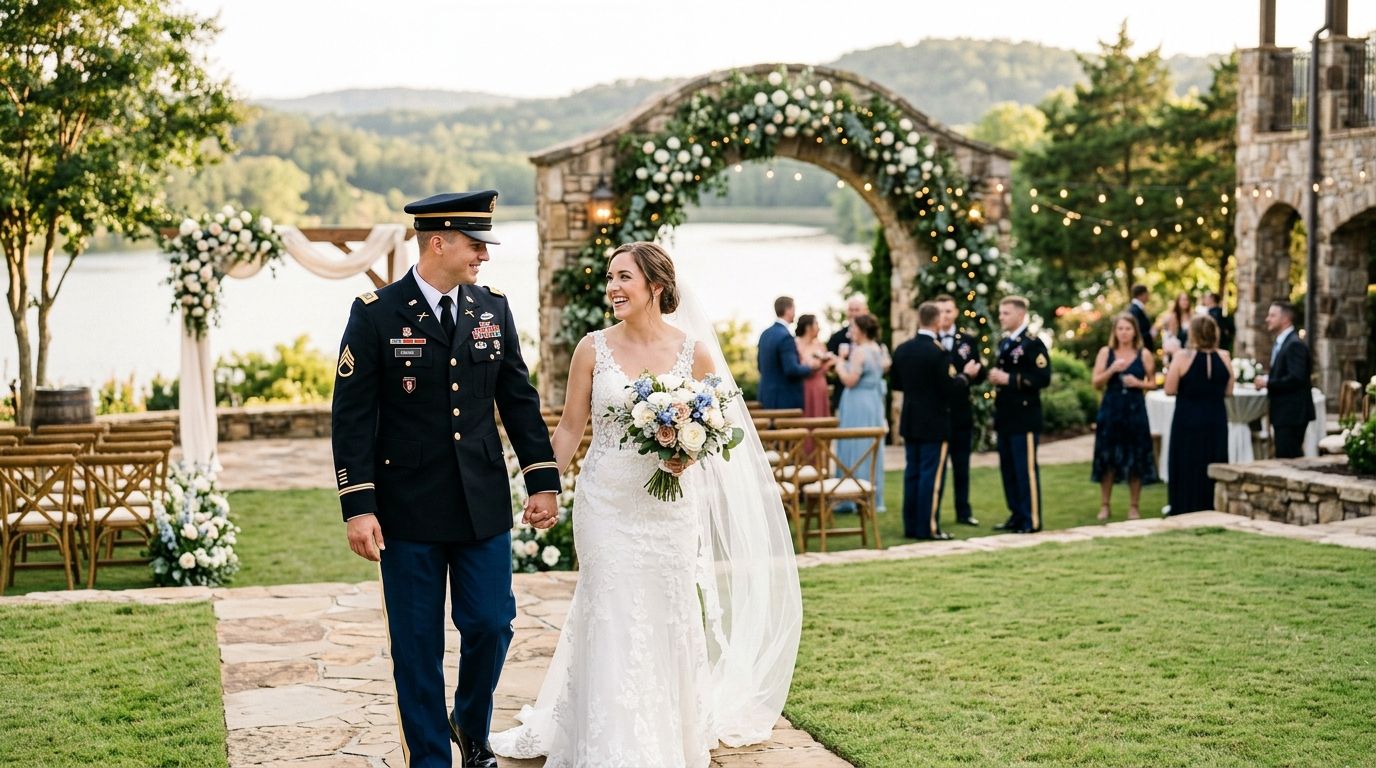
- Outdoor courtyard ceremonies give interfaith couples a religiously neutral backdrop that indoor sanctuaries can't.
Why this matters for interfaith couples
An interfaith wedding usually means two families with different expectations for how a ceremony should look, sound, and run. One side may expect a rabbi and a chuppah. The other may expect a priest, a unity candle, or no religious officiant at all. A venue built around one faith tradition — a church sanctuary, a temple hall — forces compromises neither family wants.
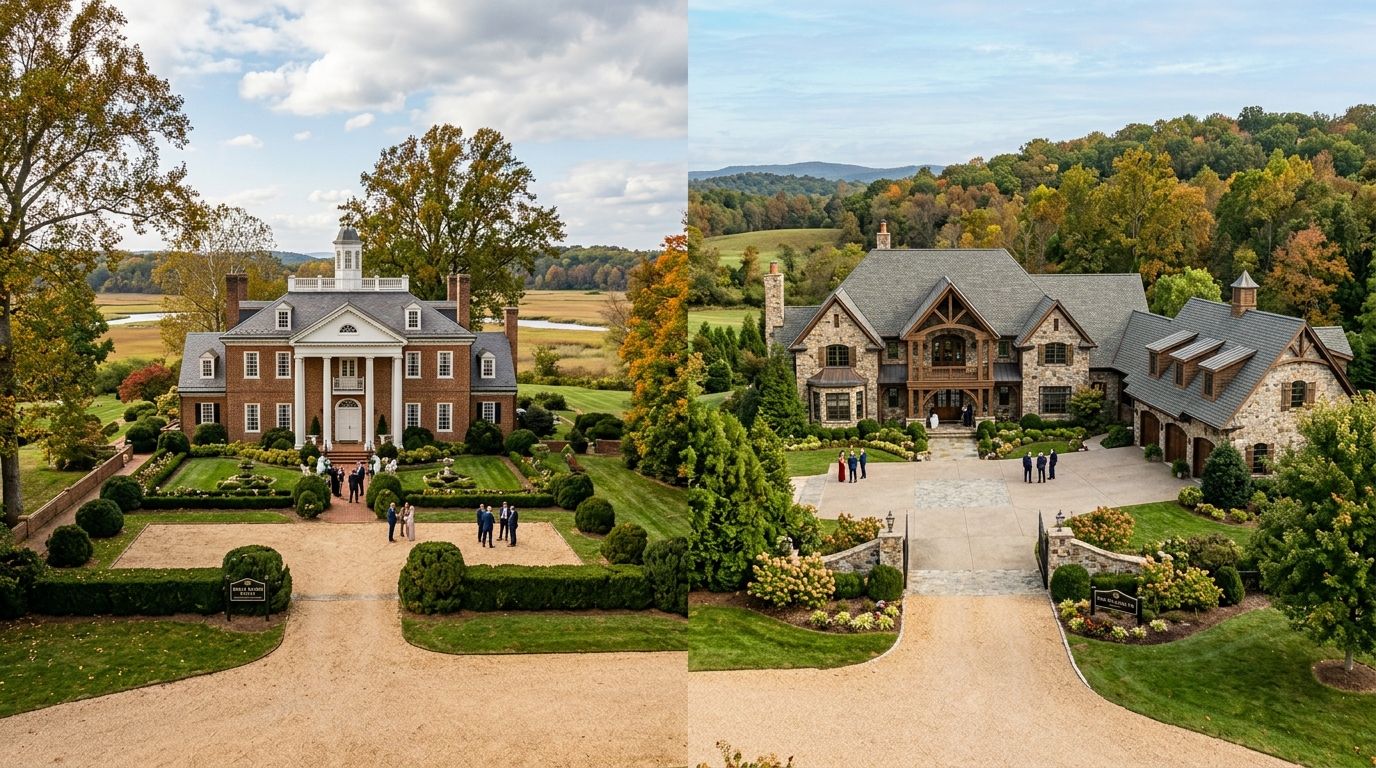
Great Marsh Estate, a Georgian manor and event venue in Bealeton, Virginia, near Washington, D.C., works for interfaith couples precisely because it isn't tied to a denomination. The courtyard ceremony sites and the restored 1800s stables reception hall are blank canvases — you bring the ritual, the venue brings the setting. That distinction matters more to interfaith couples than square footage or guest count, though both of those matter too.
How to choose a wedding venue as an interfaith couple
Confirm the venue is religiously neutral
Start by ruling out venues attached to one faith's building or leadership. A neutral site lets you build the ceremony from scratch instead of working around someone else's sanctuary rules.
- Ask directly: "Is this space affiliated with any religious institution?"
- Check whether fixed religious imagery (crosses, stained glass with specific iconography) is present in the ceremony area.
- Confirm the venue has hosted interfaith or multi-faith ceremonies before, not just single-faith weddings.
- Look for outdoor ceremony sites — a courtyard or garden is neutral by default.
- Ask if the space can be reconfigured or left bare for your own décor and ritual objects.
Ask about chuppah, mandap, and altar flexibility
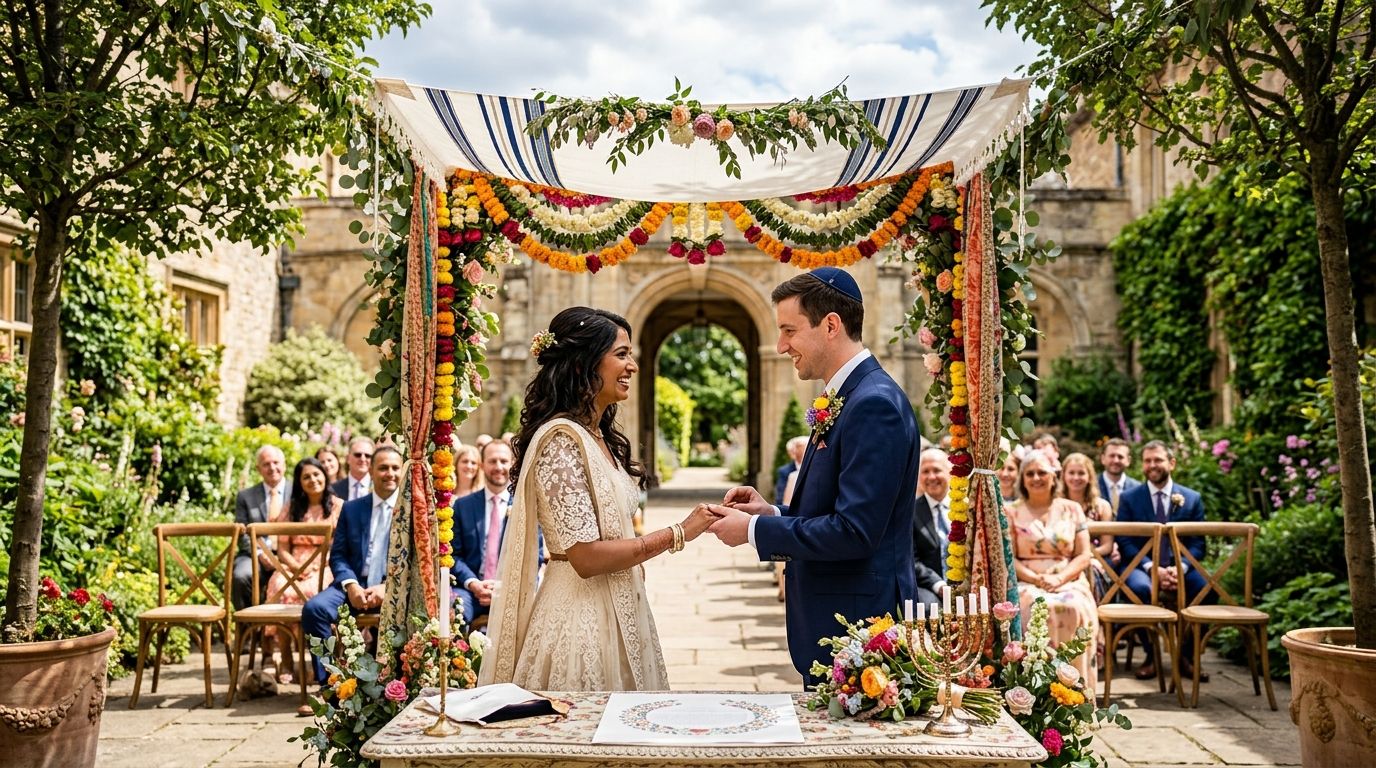
Many interfaith ceremonies combine ritual structures from two traditions — a chuppah for a Jewish-Christian wedding, a mandap for a Hindu-Christian one. The venue needs to physically accommodate whatever structure your ceremony calls for.
- Confirm ceiling height and floor anchoring options if the structure needs to be freestanding.
- Ask whether the venue allows outside vendors to install ceremonial structures, or only in-house decor teams.
- Check load-in and load-out timing — some structures take hours to assemble.
- Ask about weather backup if the structure is meant for an outdoor space.
- Get in writing what's included versus what you're renting separately.
Plan for multiple officiants and blended rituals
Interfaith weddings frequently involve two officiants — a rabbi and a minister, an imam and a priest, or a rabbi alongside a secular celebrant. Not every venue allows outside clergy, and some cap the number of officiants per ceremony.
- Ask the venue's policy on outside clergy in writing before signing a contract.
- Confirm there's no restriction on the number of officiants at the ceremony.
- Ask whether the venue has hosted a two-officiant ceremony before — experience matters for timing and flow.
- Check if the ceremony space allows for readings, blessings, or rituals in more than one language.
- Build extra time into your ceremony schedule; blended rituals run 10-20 minutes longer than single-tradition ceremonies.
Check catering flexibility for dietary and religious restrictions
Kosher and halal requirements are a real logistical constraint, not a preference. A venue that requires you to use an in-house caterer with no kosher or halal certification path is a dealbreaker for many interfaith families.
- Ask whether outside caterers are allowed, and under what conditions.
- Confirm if the venue's kitchen can accommodate a certified kosher or halal caterer, or if that caterer needs to bring their own equipment.
- Ask about separate serving stations if both families have different dietary needs.
- Get catering policy in writing — verbal assurances change between the tour and the wedding date.
Consider guest list size and extended family logistics
Interfaith weddings often mean two extended families, sometimes doubling the guest list compared to a single-tradition wedding. Capacity planning matters more here than it does for most weddings.
- Confirm the venue's maximum capacity matches your realistic guest count, not just the number on the brochure.
- Ask about seating layout options — some traditions expect gendered seating sections, others don't.
- Check if there's a separate space for family members who may need quiet time away from the main event (elderly relatives, small children).
- Ask about parking and accessibility if extended family is traveling from out of state.
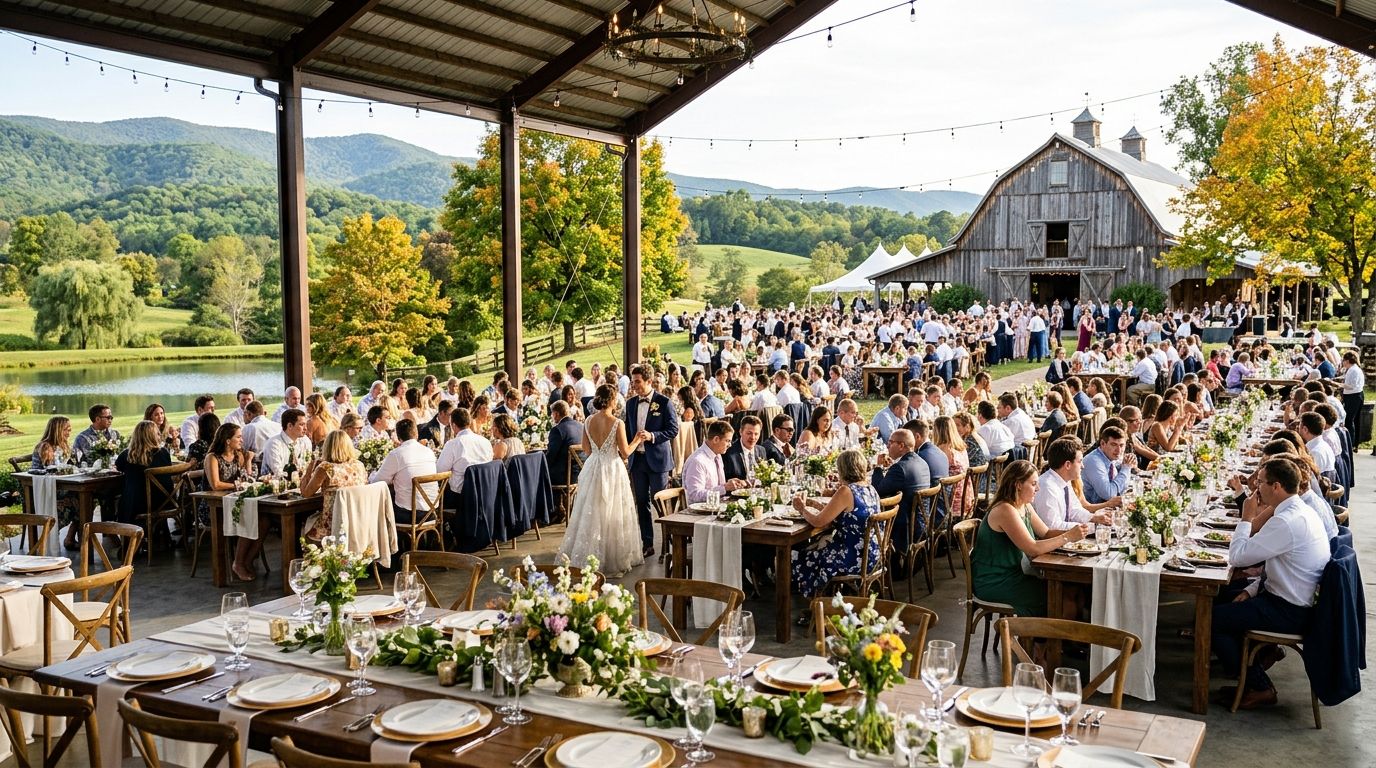
Great Marsh Estate hosts weddings for up to 200 guests, which covers most combined-family guest lists without forcing a hard cut on either side. For couples comparing options by headcount specifically, the wedding venues in Virginia ranked by guest capacity breakdown is worth reviewing before you tour anywhere.
Look at the timeline for the day
Blended ceremonies, two officiants, and multi-language readings all add time. A venue with a rigid hourly turnover schedule can rush an interfaith ceremony that needs more room to breathe.
- Ask how many hours are allotted between ceremony and reception.
- Confirm whether the venue allows a longer ceremony block if your rituals require it.
- Check if there's a private space (bridal suite, groom's lounge) for pre-ceremony rituals specific to either tradition.
- Ask what happens if the ceremony runs over — some venues charge for extra time, others build in a buffer.
Check date flexibility around religious calendars
Jewish weddings avoid Friday evening through Saturday sundown. Some Christian traditions avoid Lent. Hindu and Muslim calendars have their own auspicious and restricted dates. A venue with rigid Saturday-only booking can put you at odds with one family's calendar.
- Ask if the venue books weddings on days other than Saturday.
- Confirm whether pricing or availability changes for weekday or Sunday ceremonies.
- Check the venue's calendar against both families' religious observances before locking a date in 2026.
Comparison: venue types for interfaith couples
| Venue type | Best for | Key limitation |
|---|---|---|
| Historic manor/estate (e.g. Great Marsh Estate) | Couples wanting a neutral, non-denominational backdrop with indoor and outdoor ceremony options | Historic buildings may have layout restrictions for large structures like a mandap |
| Religious institution (church, synagogue, temple) | Couples where both partners share, or one strongly prefers, a single tradition | Rarely allows outside clergy or a second faith's rituals |
| Hotel ballroom | Couples prioritizing convenience for out-of-town guests | Indoor-only, often lacks a neutral outdoor ceremony option |
| Blank-slate industrial or barn venue | Couples wanting maximum customization with no built-in décor | Often requires renting every ceremony element from scratch |
| Outdoor garden or botanical venue | Couples wanting a fully neutral, symbol-free ceremony backdrop | Weather-dependent with limited indoor backup space |
Tour a neutral, flexible venue
See the courtyard and stables reception hall in person before you book.
Common mistakes interfaith couples make
- Booking before confirming officiant policy. Couples sign a contract, then discover the venue caps ceremonies at one officiant — a problem that should be settled before the deposit, not after.
- Assuming "outdoor space" means neutral. Some outdoor ceremony sites still sit adjacent to a chapel or have religious statuary in view. Walk the exact ceremony spot, not just the property.
- Underestimating ceremony length. Two rituals combined into one ceremony routinely run longer than either family expects. Venues with tight turnover schedules can force a rushed ceremony.
- Not getting catering policy in writing. A verbal "we can probably accommodate kosher" during a tour is not a commitment. Get it in the contract.
- Picking a date without checking both religious calendars. A Saturday wedding date that conflicts with Shabbat, or a date during a restricted period in another tradition, creates avoidable family tension.
FAQ
What makes a wedding venue interfaith-friendly?
An interfaith-friendly venue has no fixed religious décor tied to one faith, allows outside clergy and multiple officiants, and can accommodate ceremony structures like a chuppah or mandap. A courtyard or non-denominational hall, like the ones at Great Marsh Estate, works better than a single-faith sanctuary.
Can you have two officiants at a wedding venue?
Most non-religious venues allow two officiants, but policy varies by property. Confirm officiant limits in writing before booking, since some venues cap ceremonies at one clergy member.
Is a chuppah allowed at outdoor wedding venues in Virginia?
Yes, most outdoor ceremony venues in Virginia allow a chuppah, but confirm ground anchoring, weight limits, and load-in access ahead of time. Weather backup for the structure should also be part of the contract.
Do wedding venues accommodate kosher or halal catering?
It depends on whether the venue allows outside caterers. Venues with a locked in-house caterer often can't support kosher or halal certification requirements, so ask about outside catering policy before signing.
How much space do interfaith weddings need for extended family?
Interfaith weddings frequently combine two full extended families, so plan for a guest count on the higher end of your estimate. A venue with a 200-guest capacity, like Great Marsh Estate, gives more room to avoid a hard guest-list cut.
Are historic manor venues neutral enough for interfaith ceremonies?
Historic manors without religious affiliation, like Georgian estates, are generally neutral because they weren't built for one faith's worship. Confirm the ceremony space specifically has no fixed religious imagery before booking.
What's the best time of year for an interfaith wedding in Virginia?
Spring and fall are the most popular seasons for Virginia weddings in 2026 because of mild temperatures for outdoor ceremonies. Check both families' religious calendars against your target month before locking a date.
How far in advance should interfaith couples book a venue?
Book 12 to 18 months ahead in 2026, especially if you need a Sunday or weekday date to work around a Saturday religious restriction. Popular Saturday dates in peak season fill first.
One last thing
The detail interfaith couples overlook most often isn't the ceremony structure or the catering — it's the private prep space. If one tradition calls for a pre-ceremony ritual (a Jewish bedeken, a Hindu haldi), you need a bridal suite or groom's lounge with enough time and privacy built into the schedule, not a rushed 20-minute window between hair and photos.